
The Mistake: Assuming "No Snow" Means "No Prep"
The most common mistake homeowners make this time of year is skipping garage door prep entirely. It's an easy trap to fall into—there's no frost to scrape, no ice to worry about, and the forecast is simply trending toward cooler, drier days. Why bother winterizing a door that will never see a snowflake?
Here's the problem: in this part of Florida, October and November aren't really about bracing for cold. They're about dealing with the aftermath of a long, hot, humid hurricane season and getting the door ready for the drier stretch ahead. Months of salt air, afternoon downpours, and swinging humidity levels leave marks on hardware, seals, and wood that don't show up until the door starts acting up—usually right when you've got guests parking in the driveway and the garage doubling as extra storage or a workspace.
Why This Particular Stretch of Weather Matters
Garage doors here take a different kind of beating than doors in colder climates. Instead of ice damming the track, you're dealing with:
- Salt air corrosion on springs, hinges, and tracks, especially in homes closer to the coast
- Moisture swelling in wood doors and wood-trimmed openings after a humid summer
- Storm stress on wind-load hardware, even if a storm never made a direct hit nearby
- Sand and grit buildup in the tracks from beach traffic and open-garage afternoons
Fall is the window to catch and fix these issues before the door gets heavy daily use from holiday visitors, delivery traffic, and shorter days that mean the door opens and closes more often during low-light hours when small problems are harder to spot.
A Real Fall Checklist, Not a Generic One
1. Look for Storm-Season Damage You Might Have Missed
Even if nothing hit your house directly, wind-load hardware can loosen from pressure changes during storm season. Walk the track from top to bottom and check:
- Bent or dented track sections
- Loose or missing bolts on the horizontal and vertical track brackets
- Panels that look slightly warped or no longer sit flush
Any of these can throw the door off track or strain the opener, and they're much easier to fix now than after a few more months of use.
2. Check Weatherstripping and Seals
The rubber seal along the bottom of the door and the vinyl stripping around the frame take a beating from heat and humidity. By fall, it's common to find:
- Cracked or brittle bottom seals that no longer flex
- Gaps where water pooled during afternoon downpours
- Seals that have pulled away from the track due to swelling and contracting all summer
A failed seal doesn't just let in rain—it lets in sand, bugs, and humid air that speeds up rust on everything stored nearby. Replacement seal kits are inexpensive and one of the easiest DIY fixes on this list.
3. Lubricate Everything That Moves
Salt air accelerates rust on springs, rollers, hinges, and the track itself. A light coat of garage-door-specific lubricant (not WD-40, which doesn't hold up well) on rollers, hinges, and springs goes a long way. Skip the track itself—lubricating it can actually attract more grit and cause binding.
4. Test the Door's Balance
Disconnect the opener and lift the door halfway by hand. It should stay in place on its own. If it drifts down or feels noticeably heavier than it used to, the springs have likely lost tension—common after a summer of heat cycling and humidity swings. A door that's out of balance puts extra strain on the opener motor and can fail outright with little warning.
5. Inspect the Cables
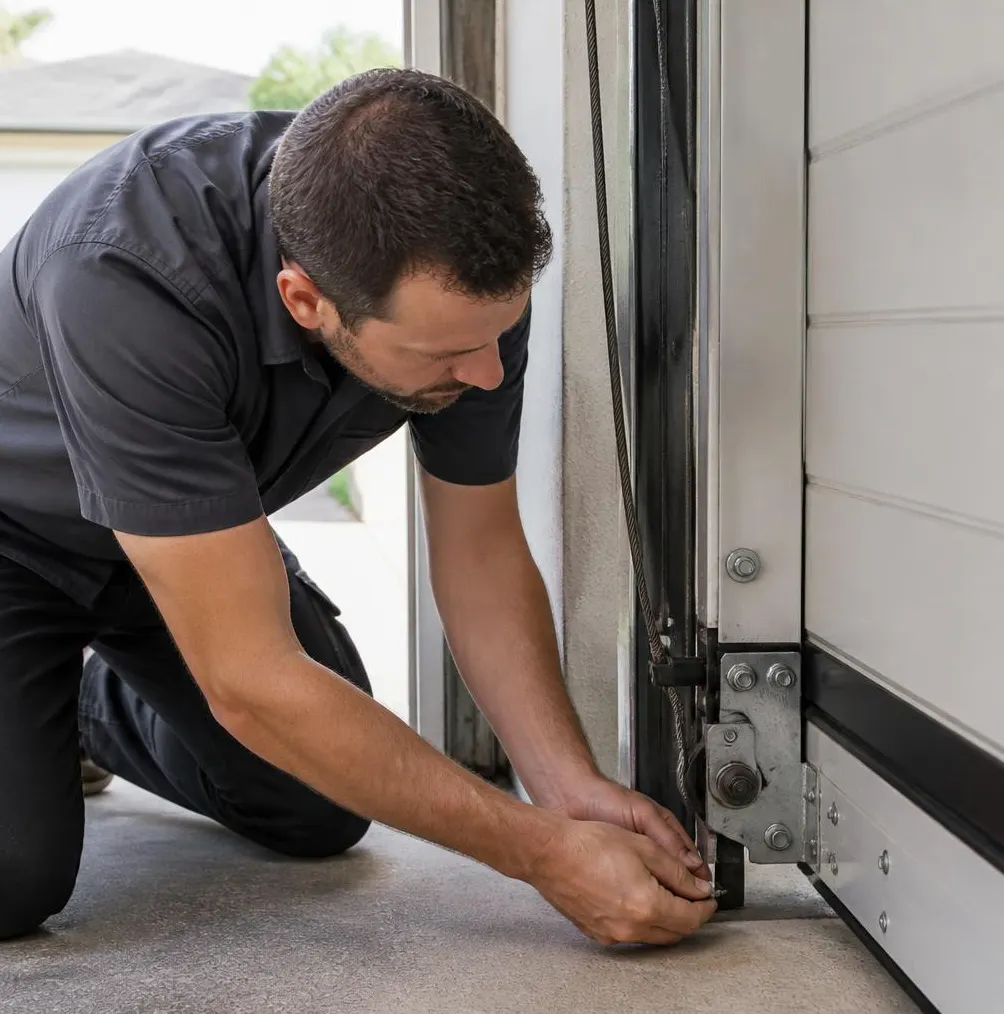
While you're checking the springs, look at the lift cables for fraying, rust spots, or visible wear near the bottom bracket. Cables under tension that fail can snap suddenly, and salt air corrosion makes this more likely near the coast than inland.
6. Clean Out the Tracks
Sand and salt residue builds up in the tracks over a summer of frequent use. Wipe them down with a damp cloth and check for pitting or early rust spots, especially on homes closer to the water.
7. Run the Opener's Safety Features
Place a block of wood in the door's path and close it—the door should reverse immediately on contact. Also check the photo-eye sensors near the floor on each side of the track; a light film of salt haze or a knocked-out-of-alignment sensor is a common, easy-to-miss cause of a door that won't close all the way.
When to Call Cocoa Beach Door & Opener
Some of this checklist is genuinely DIY-friendly—lubrication, visual inspections, wiping down tracks. But a few things are worth having a professional handle, especially anything involving spring tension or cables under load, since they're under enough force to cause injury if something slips.
If your fall inspection turns up a door that's slow to lift, noticeably off-balance, or dragging on one side, that's usually a sign the springs need adjustment or replacement—our Garage Door Spring Repair service handles that safely with the right tools. And if you'd rather not run through the whole checklist yourself, our Garage Door Maintenance & Tune-Up service covers the full inspection: balance, cables, rollers, hinges, seals, and opener safety testing, all in one visit.
Catching these issues now, before the door sees months of extra holiday traffic, is a lot cheaper than dealing with a spring failure or a stuck door in December.
If you're in Cocoa Beach, Cape Canaveral, Merritt Island, or anywhere else on the Space Coast and want your garage door checked out before the season shifts, give Cocoa Beach Door & Opener a call. We'll get it sorted quickly and get it done right.