
What That Grinding and Rattling Is Actually Costing You
A noisy garage door opener isn't just annoying at 6am when you're backing out for work. It's usually a symptom of hardware wearing out faster than it should, and in a coastal, humid climate like this one, that wear accelerates. Salt air corrodes steel rollers and hinges. Humidity swings swell wood framing and shift track alignment. Afternoon downpours mean more daily open-and-close cycles as people duck in and out of the garage. Ignore a squeak or a bang through one more hurricane season and you're not looking at a quick fix anymore — you're looking at a seized roller that cracks a track, a chain that jumps its sprocket, or an opener motor straining so hard it burns out early. What costs a few dollars in grease and hardware today can turn into a full opener replacement, or a spring failure that leaves the door stuck, if you wait until spring.
Tools You'll Need
- Socket set or adjustable wrench
- Garage-door-specific lithium or silicone-based lubricant (not WD-40 or an all-purpose spray)
- Clean rags
- Sturdy stepladder
- Work gloves and safety glasses
- Flashlight
- A helper, for anything involving the door itself
Step-by-Step: From Cheap Fixes to Bigger Repairs
1. Tighten Every Bolt and Screw
Start at the top: the bolts holding the opener motor to the ceiling bracket, the bolts on the track hangers, and the hinges connecting door panels. Vibration loosens hardware over time, and that loosening speeds up in a humid climate where wood and metal expand and contract. A socket set and ten minutes is often enough to quiet a surprising amount of rattle.
2. Lubricate the Moving Parts
Apply a garage-door-rated lubricant to the hinges, roller stems, and the opener's chain or screw drive. Avoid WD-40 long-term — it's a solvent, not a lubricant, and it dries out fast, leaving parts to attract salt-laden dust and grit that grinds instead of glides. A silicone or lithium-based product holds up better near the coast.
3. Inspect and Replace Worn Rollers
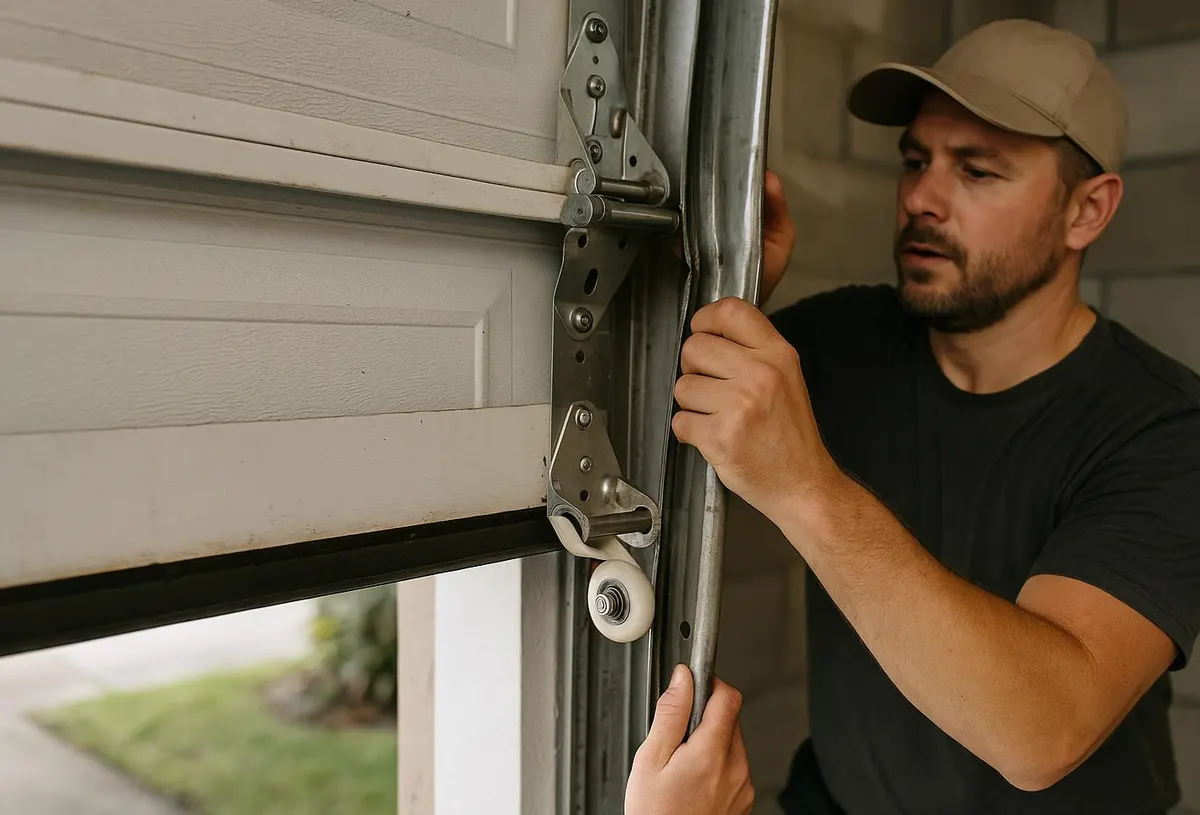
Nylon rollers typically last 7–10 years before they crack or flat-spot, especially with daily heat-humidity cycling. Steel rollers with exposed bearings rust faster this close to the ocean. If your rollers look pitted, flat on one side, or you can wiggle them loose in the bracket, they're due. Rollers run roughly $3–$5 each and are one of the easiest swaps a homeowner can do — remove the roller bracket, slide the old roller out, slide the new one in, and re-secure.
4. Check the Opener's Chain or Belt Tension
A chain-drive opener that's too loose will slap and clatter with every cycle. Most openers have a tensioning bolt near the motor head; consult your owner's manual and adjust until the chain has slight, even slack — not taut, not sagging. Lubricate the chain itself while you're there.
5. Look for Bent or Misaligned Track
Storm debris, a stray bump from a car bumper, or just years of settling can leave a track slightly bent or pulled away from the frame. Run a flashlight along the full length of both tracks looking for gaps, dents, or spots where the rollers bind. Minor gaps can sometimes be corrected by loosening and re-tightening the mounting brackets, but a visibly bent track usually needs replacement rather than reshaping.
6. Consider a Belt-Drive Swap
If you've done all of the above and the opener still booms through the house every time it runs, the issue may be the drive mechanism itself. Chain-drive openers transmit vibration through the rail and into the framing — a real problem if a bedroom sits above or next to the garage. A belt-drive opener uses a reinforced rubber belt instead of metal chain, cutting noise dramatically. Replacement units generally run $150–$400 for the opener itself, not counting installation.
What You Can Handle Yourself vs. What Needs a Technician
Tightening hardware, lubricating parts, and swapping worn rollers are all reasonable weekend projects with basic tools and a stepladder. Where it's time to call in a technician: anything involving the torsion or extension springs, which store enough force to cause serious injury; track realignment that requires taking the door off its rollers; diagnosing a motor that hums but doesn't move the door, which can mean a failing circuit board or capacitor; and installing a new belt-drive opener, which involves wiring, safety-sensor calibration, and setting travel limits correctly so the door doesn't reverse improperly or crush something underneath it.
When to Call Cocoa Beach Door & Opener
If you've tightened, lubed, and swapped rollers and the door still sounds like it's fighting for its life — or if you spot a bent track, a chain that keeps jumping, or an opener that's struggling to lift the door — that's our cue. We handle full Garage Door Opener Installation if a belt-drive swap makes sense for your home, and our Garage Door Maintenance & Tune-Up service covers the hardware inspection, lubrication, and alignment checks that catch small issues before they become spring failures or stuck doors mid-storm season.
If your garage door is making more noise than it should, give Cocoa Beach Door & Opener a call. We serve Cocoa Beach, Cape Canaveral, Merritt Island, Rockledge, Cocoa, Satellite Beach, Indian Harbour Beach, and Melbourne, and we can usually get a technician out fast to quiet things down for good.