
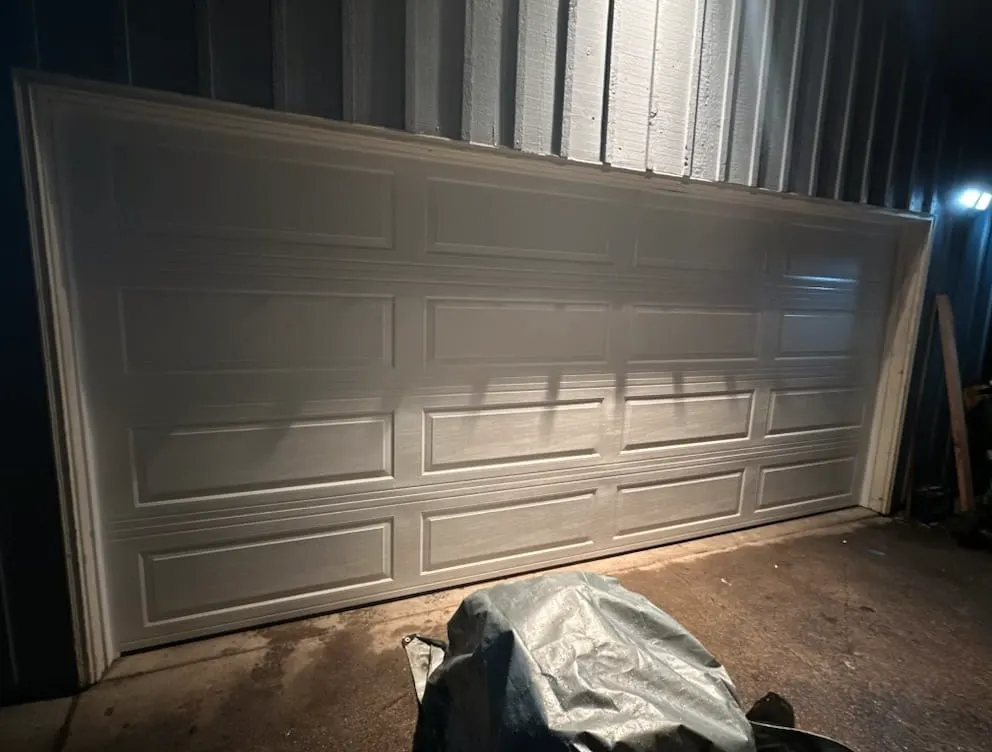
The Moment You Notice It's Time to Choose
It usually happens on a Saturday. You're pulling the mower out, or hosing down the garage floor after another afternoon downpour, and you spot it: a line of rust bubbling up along the bottom panel of your garage door, or a seam where the paint has lifted and the metal underneath looks pitted. Maybe it's not rust at all — maybe a panel is swollen at the bottom edge, or the door looks faded and chalky compared to the trim around it. Whatever the sign, the question is the same: what do I replace this with, and what's actually going to hold up out here?
Every garage door material has a different relationship with heat, humidity, salt air, and wind. Here's how the five main options actually perform once they're hung on a home near the coast.
Steel
Steel is the standard choice for a reason: it's strong, it's available in wind-rated configurations for hurricane season, and it doesn't warp the way wood can in humidity. The trade-off is corrosion. Standard steel doors are galvanized and painted, but salt air works on any seam, scratch, or ding in that coating over time. Once rust starts at an edge or a dent, it spreads underneath the paint where you can't see it until it bubbles up.
- Strength: Excellent, especially in doors built for wind-load requirements
- Coastal durability: Good if coated well and kept free of chips and deep scratches; weak point is any exposed edge
- Maintenance: Rinse off salt residue periodically, touch up scratches before they rust
- Typical cost range: Lower to mid-range compared to wood or fiberglass
Wood
Wood garage doors look great and nothing else quite matches the look. But humidity is wood's enemy, and this area has humidity in abundance. Wood absorbs moisture during humid stretches and releases it during drier spells, and that swelling-and-shrinking cycle is what causes panels to stick in their tracks, seams to open up, or a door to bind against the frame on one side. Add afternoon downpours and any unsealed edge becomes an entry point for rot.
- Strength: Depends on species and construction; generally needs reinforcement for wind-rated applications
- Coastal durability: Poor without diligent sealing and refinishing on a regular schedule
- Maintenance: Repaint or reseal regularly, inspect bottom panels for swelling after wet seasons
- Typical cost range: Mid to high, with ongoing upkeep costs on top
Aluminum
Aluminum won't rust, which sounds like the perfect answer to salt air. In practice, aluminum garage doors trade corrosion resistance for dent resistance — a stray bike pedal or a bump from a car bumper leaves a visible dent that steel would often shrug off, and aluminum doesn't flex back the way some composite panels do. It's also lighter, which matters for wind load; aluminum doors generally need more reinforcement to meet the same wind ratings steel achieves more easily.
- Strength: Lower unless heavily reinforced; check wind rating carefully
- Coastal durability: Very good against corrosion, weaker against dents
- Maintenance: Low; mostly cosmetic touch-ups after impacts
- Typical cost range: Mid-range
Fiberglass
Fiberglass doors are built over a steel or aluminum frame with fiberglass panels on the outside, and that combination is a genuinely good fit for this climate. The fiberglass skin doesn't rust, doesn't rot, and resists the fading that hits painted steel and wood after years of strong sun. It can crack under a hard enough impact, but day to day it shrugs off salt air and humidity better than almost anything else on this list.
- Strength: Good when built over a reinforced steel or aluminum core
- Coastal durability: Excellent against rust, UV fading, and moisture swelling
- Maintenance: Low; occasional rinse and inspection for cracks after impacts
- Typical cost range: Mid to high
Composite
Composite doors use engineered wood-fiber or synthetic materials to mimic the look of real wood without wood's moisture problems. They don't swell or rot the way solid wood does, and they hold paint and stain better over time in a humid environment. They're a solid middle ground if you want a wood look without the maintenance wood demands, though they typically cost more than steel and need the same attention to wind rating that any door does.
- Strength: Good, varies by manufacturer and core construction
- Coastal durability: Good; resists swelling and rot far better than solid wood
- Maintenance: Low to moderate; periodic refinishing of the surface coating
- Typical cost range: Mid to high
What We'd Recommend for Typical Homes Here
For most homes in this area, a quality steel door with a good factory coating and a wind rating appropriate for the storm risk is still the most practical choice — it balances cost, strength, and durability as long as you stay ahead of scratches and rinse off salt buildup. If budget allows and corrosion resistance matters more to you than dent resistance, fiberglass is the upgrade worth considering, especially for a door that faces prevailing wind and salt spray directly. Wood looks beautiful but asks a lot of upkeep in a humid environment, and it's the one material we'd steer most homeowners away from unless they're genuinely committed to regular sealing and refinishing. Aluminum and composite both have a place depending on whether dent resistance or a wood-look finish matters more to your household.
When to Call Cocoa Beach Door & Opener
If you're seeing rust bubbling through paint, a panel that swells and sticks seasonally, or you're simply ready to replace a door that's taken enough hits from salt air and storms, that's the right time to call us. We handle Garage Door Installation & Replacement for all of these materials, and we'll walk the specific side of your home the door faces, the wind exposure, and your budget before recommending a material. If the existing door is still sound but showing wear, our Garage Door Maintenance & Tune-Up service can catch early corrosion or swelling before it turns into a full replacement.
Give Cocoa Beach Door & Opener a call for a straight answer on what material makes sense for your home on the Space Coast, and we'll get it installed right.